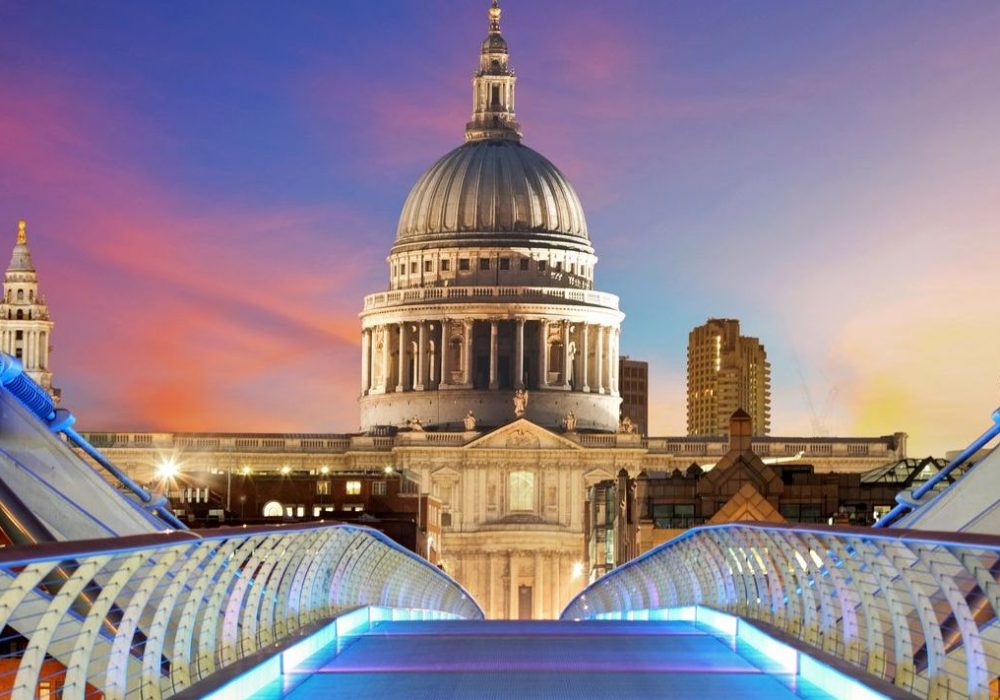
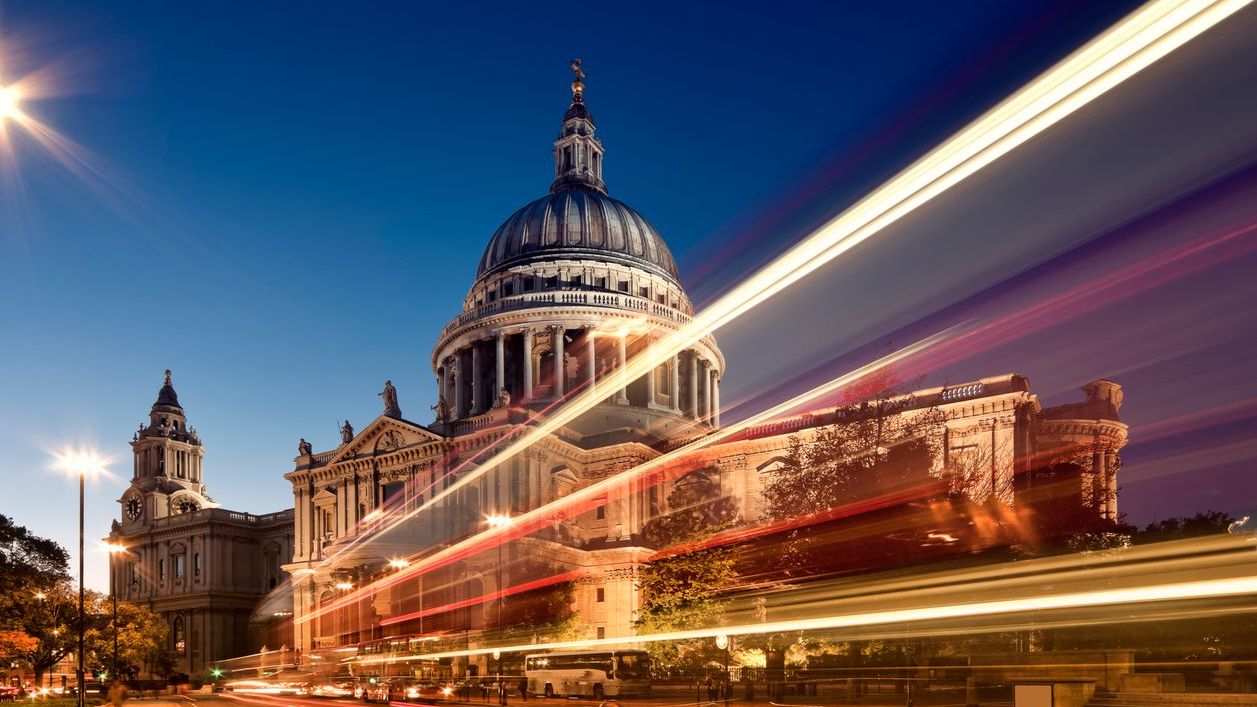
Few London landmarks feel quite as magical after dark as St Paul’s Cathedral at night. While daytime visits focus on history, architecture and interiors, the evening experience is all about mood, light and perspective.
This guide explores what makes St Paul’s Cathedral London at night so special, from the way it is illuminated to the best places for photos, how to get there after hours, nearby attractions to combine with your visit, and practical safety tips.
Discover St Paul’s Cathedral at night
Designed by Sir Christopher Wren and completed in 1710, St Paul’s Cathedral has been part of London’s skyline for over 300 years. During the day, it stands as a busy cultural and religious landmark. At night, however, the atmosphere changes completely.
As daylight fades, the surrounding streets become quieter, and the cathedral’s illuminated dome begins to highlight the skyline.
Seeing St Paul’s Cathedral night views allows you to appreciate the scale and symmetry of the building without the distractions of daytime crowds.
Set in the heart of the City of London, close to the River Thames, the cathedral feels both central and surprisingly peaceful once offices close and commuter traffic disappears.
Night views and lighting
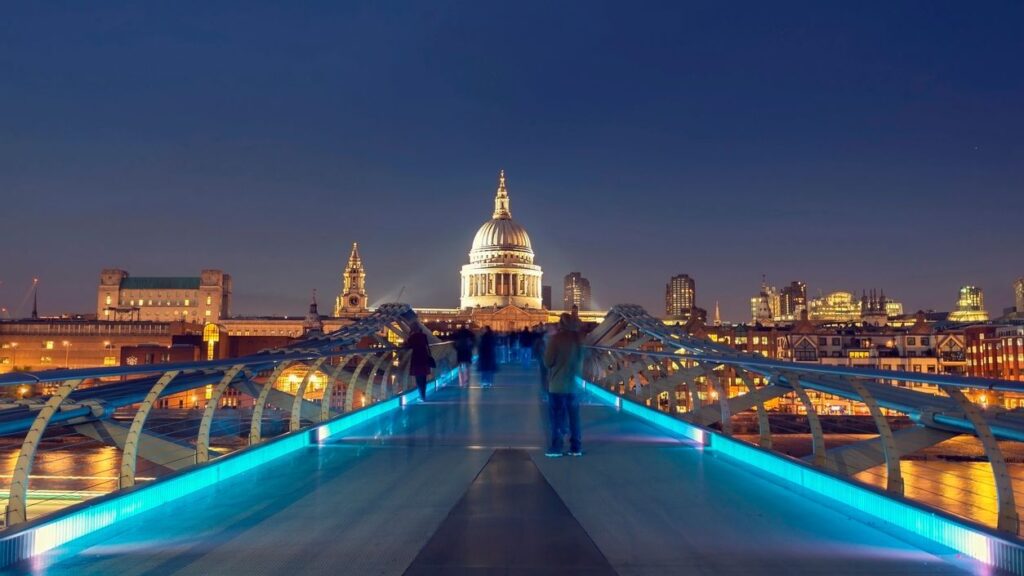
One of the main reasons to experience St Paul’s Cathedral at night is the lighting. Carefully designed exterior illumination brings out the cathedral’s architectural details, particularly the dome, which rises approximately 111 metres above ground level.
The lighting uses warm tones rather than harsh white light, creating contrast against the dark London sky. As a result, the building appears softer and more dramatic at the same time. During the “blue hour”, roughly 20–40 minutes after sunset, the sky retains a deep blue colour, making this one of the best moments to see St Paul’s Cathedral London at night at its most photogenic.
Seasonal timing matters:
- In summer, sunset can be as late as 9:15 pm
- In winter, darkness arrives as early as 4:00 pm
- Spring and autumn offer balanced light and quieter conditions
Another advantage of visiting at night is the reduced foot traffic. Without tour groups and queues, you can walk around the cathedral freely, pause for photos and take in the surroundings at your own pace.
Best photos spots
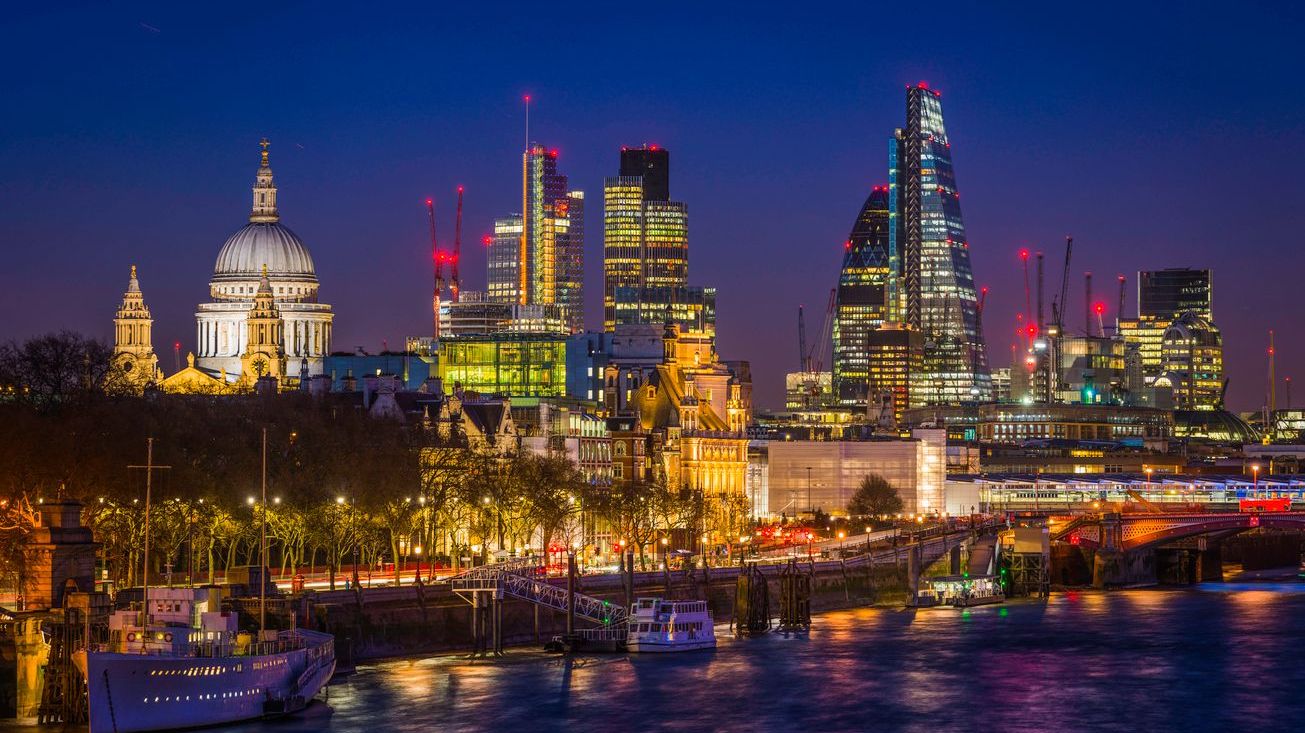
If photography is part of your plan, St Paul’s Cathedral at night offers some of the most recognisable views in London. A few locations stand out, each offering a slightly different perspective.
Millennium Bridge
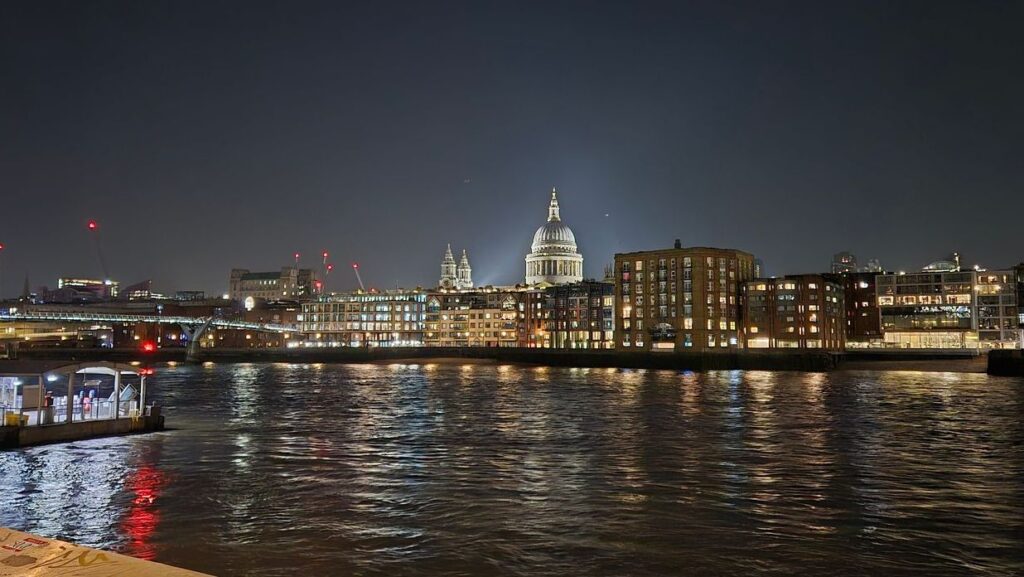
This is the most iconic viewpoint. Standing on the pedestrian bridge, you get a perfectly aligned view of the cathedral dome, framed by the bridge’s structure. At night, the reflections on the Thames add depth and movement to photos.
South Bank of the Thames
Walking along the river near the Tate Modern provides wider angles and creative compositions. From here, you can capture both the cathedral and the surrounding city lights.
Carter Lane and nearby streets
For quieter shots, side streets around the cathedral offer close-up angles with fewer people. These spots are ideal for architectural details and moody compositions.
Opening hours and access
While the exterior of St Paul’s Cathedral is always accessible, the interior typically closes in the early evening. Most days, the last entry is around 4:00–4:30 pm, although this varies depending on services and events.
Occasionally, evening services such as Evensong may allow limited access, but visits are mainly about enjoying the exterior and surrounding area.
Getting there:
- St Paul’s Underground Station (Central Line) is just a few minutes away
- Mansion House and Blackfriars stations are within walking distance
- Multiple bus routes run through the area at night
The area is well-lit, flat and easy to navigate, making it suitable for evening walks without rushing.
What attractions are near St Paul’s Cathedral?
A visit to St Paul’s Cathedral at night fits naturally into a wider evening itinerary. The surrounding area offers plenty to see and do without travelling far.
Millennium Bridge night walk
Crossing the bridge after dark connects you directly to the South Bank and offers continuous views of the cathedral and river.
Tate Modern
On selected evenings, the museum stays open late. Even when closed, the building itself and the surrounding area remain lively.
One New Change rooftop terrace
When open, this free rooftop viewing platform provides elevated views of the cathedral dome, especially striking at night.
Shakespeare’s Globe area
A short riverside walk leads to restaurants, pubs and riverside seating, ideal for a relaxed end to the evening.
Suggested evening route
1. Arrive at St Paul’s around sunset
2. Walk around the cathedral exterior
3. Cross Millennium Bridge for photos
4. Dinner or drinks along the South Bank
Useful visiting tips
The City of London is generally very safe in the evening, particularly around major landmarks like St Paul’s Cathedral. Streets are well-lit, and CCTV coverage is extensive.
That said, a few practical tips help ensure a smooth experience:
- Stay aware of your surroundings, especially with camera equipment
- Dress for the weather, as winds can be strong near the river
- Avoid peak commuter times if you want quieter photos
- Stick to main routes and lit streets
If you are travelling alone, the area remains busy enough to feel secure without being crowded, especially between early evening and late evening hours.
Come and visit St Paul’s Cathedral at night
Seeing St Paul’s Cathedral London at night offers a completely different perspective on one of the city’s most famous landmarks. Without daytime noise and crowds, the cathedral feels calmer, more intimate and visually striking. The lighting, the reflections on the Thames and the surrounding architecture all combine to create an experience that feels both iconic and beautiful.
For a comfortable and central base, Urban Retreat Apartments offer stylish accommodation close to London’s top landmarks, making evening walks, night photography and riverside dining easy and enjoyable. With flexible space and prime locations, it is an ideal choice for experiencing London after dark.